Spring Runoff and Your Well: Protecting Ontario Well Water During Snowmelt and Flooding
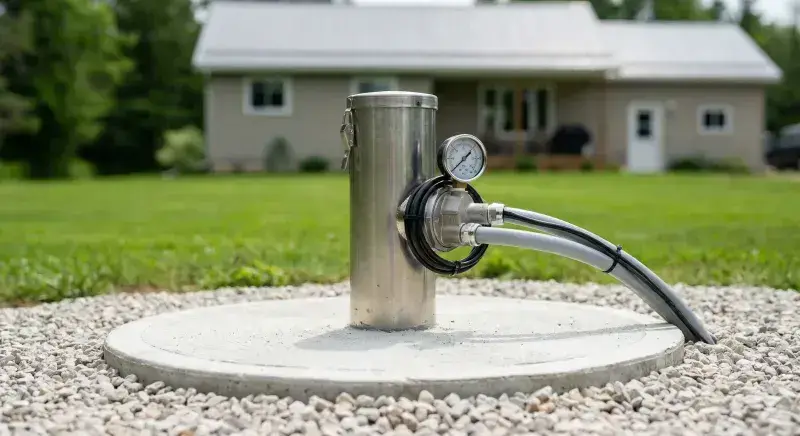
Is well water safe to drink after spring flooding? Not until a lab test says so. Spring snowmelt is the highest-risk period of the year for private wells in Simcoe County and Grey County: months of accumulated snow release into still-frozen ground, carrying bacteria, road salt, septic effluent, and field runoff across the surface. If any of it finds a path into your well, it bypasses the natural filtration that normally keeps groundwater clean. After more than six decades working on wells across this region, our crews spend every April and May responding to the same pattern: cloudy water, a changed taste, or a failed bacteria test right after the melt.
Why snowmelt is the highest-risk season for wells in Simcoe and Grey County
Our region receives some of the heaviest snowfall in southern Ontario. Three things happen at once during the melt: months of snowpack release in weeks, often accelerated by spring rain; frost still locks the upper soil, so meltwater sheets across the surface and ponds in low spots instead of infiltrating; and that surface water is dirty, carrying animal waste, septic effluent from saturated leaching beds, road salt, and fertilizer from surrounding fields.
Properly constructed wells are built to keep this water out. Ontario Regulation 903 requires casing extending at least 40 centimetres above finished grade, a sealed vermin-proof cap, and an annular seal of bentonite or cement grout between the casing and the borehole. When all three are intact, meltwater flows past the well and the aquifer stays protected. When any one fails, spring runoff finds the gap.
How surface water gets into a well
A damaged, loose, or outdated well cap
The cap is the first line of defence and the most common failure point. Caps crack from age and frost, work loose from vibration, or get knocked askew by snow clearing equipment — and older wells may still have unsealed caps never designed to keep out flowing water. Any gap at the top of the casing lets runoff drop straight down the well.
Ground that slopes toward the well
The ground around a wellhead should slope away from the casing in every direction. On many properties, soil settling, landscaping changes, or a well drilled in a low spot leave the casing in a natural collection point where meltwater ponds every spring — and even a small defect below the waterline becomes an intake.
A failed annular seal
The annular seal is invisible from the surface, which makes it the most overlooked pathway. When the grout between casing and borehole was poorly placed, has shrunk, or was never installed at all — common in wells predating modern standards — surface water migrates down the outside of the casing directly into the aquifer. The classic signature is bacterial contamination that returns after every disinfection, worst in wet seasons; a failed seal cannot be fixed with chlorine.
Old and shallow wells — including the ones nobody uses anymore
Hand-dug wells, sandpoints, and shallow bored wells draw from groundwater close to the surface with little natural filtration above it, so they are inherently vulnerable during the melt. Just as important are the wells nobody thinks about: the abandoned dug well behind the barn, the well that was replaced but never sealed. Every one is an open conduit into the same aquifer your drinking well draws from — on the older farm properties we service, an unsealed abandoned well is one of the most common reasons a drinking well will not stay clean.
The warning signs after the melt
Watch for these in the days and weeks after the snow goes:
- Cloudy or turbid water. Cloudiness during or after the melt means sediment-laden surface water is short-circuiting into the well — the single most common spring complaint we hear.
- A change in taste or smell. An earthy or musty taste, a salty note from road salt, or any new odour points to a new water source entering the well.
- A positive coliform test. Total coliform indicates surface water is reaching the well; E. coli indicates fecal contamination and makes the water unsafe to drink, full stop.
- Water around the wellhead. If meltwater is ponded against the casing, assume the well is at risk even if the water still looks fine.
Homeowners often wait for cloudy spring water to “clear up on its own.” It usually does — and the bacteria that arrived with the sediment are still there after the water runs clear.
What to do if you suspect spring contamination
1. Stop drinking the water
Switch immediately to bottled water for drinking, cooking, and brushing teeth — boiling kills bacteria as a stopgap, but does nothing for chemical contaminants. If floodwater has submerged your wellhead or pump, treat it as urgent: our emergency well service handles flooded wells every melt season.
2. Test through your health unit — it is free
Bacteriological testing of private well water is free in Ontario through Public Health Ontario’s laboratory system. Simcoe County residents can get sample bottles and drop-off information through the Simcoe Muskoka District Health Unit, and Grey County residents through their local health unit. The province’s guide to testing and treating private water wells explains how to read the results.
3. Shock chlorinate the well
If the test comes back positive, the well needs shock chlorination: a concentrated chlorine solution circulated through the well and household plumbing, held for an extended contact time, then flushed until it clears. It works well for a one-time contamination event — but concentration, circulation, contact time, and flush-water disposal all have to be done right, which is why many of our customers have us perform it and inspect the wellhead at the same time.
4. Retest before you drink
Disinfection is not finished until a follow-up sample confirms zero E. coli and zero total coliform. If the retest fails — or passes now but fails again next spring — stop treating the symptom: the well has a structural pathway that needs a permanent fix.
The permanent fixes
Recurring spring contamination is a construction problem, not a water problem. The lasting solutions, roughly in order of cost:
- Replace the well cap with a modern sealed, vermin-proof cap — the least expensive upgrade in well ownership and the one with the highest payoff.
- Extend low casing and regrade. Casing below the 40-centimetre minimum should be extended and the ground built up to slope away from the well. Our well installation and completion crews handle casing extensions, remedial sealing, and upgrades of older wellheads to Regulation 903 standards.
- Address a failed annular seal. A video inspection determines whether remedial grouting can restore the seal or whether the well is better replaced.
- Decommission unused wells. Any abandoned well should be properly decommissioned by a licensed contractor — plugged and sealed from bottom to top so it can never again act as a contamination conduit. Ontario regulation requires it, and it protects every well on the same aquifer.
Geography shapes the risk across our service area. The high water tables and sandy soils around Wasaga Beach mean shallow aquifers with little buffer between surface and screen. The flat agricultural land of Essa Township drains slowly, leaving meltwater standing near wellheads for weeks. And snowbelt properties around Meaford see the region’s largest snowpack volumes releasing over fractured bedrock. Wherever you are, the principle is the same: the well construction, not the season, decides whether runoff becomes a problem.
Frequently Asked Questions
Is my well water safe to drink after spring flooding?
Treat it as unsafe until a laboratory test proves otherwise. If floodwater has reached your wellhead, or your water has turned cloudy or changed taste or smell after the melt, stop drinking it and switch to bottled water. Submit a sample for free bacteriological testing through your local health unit, and do not return the well to drinking service until results confirm zero E. coli and zero total coliform.
How do I get my well water tested in Simcoe County?
Bacteriological testing of private well water is free in Ontario through Public Health Ontario’s laboratories. Pick up a sample bottle from the Simcoe Muskoka District Health Unit or a designated drop-off location, follow the sampling instructions exactly, and return the sample within the required window — usually 24 hours. Results report total coliform and E. coli, the standard indicators of surface contamination; Grey County residents test through their local health unit.
What is shock chlorination and can I do it myself?
Shock chlorination is the controlled disinfection of a well using a concentrated chlorine solution that is circulated through the well and household plumbing, held for an extended contact time, then flushed until it clears. Homeowners can follow the Ontario government’s published procedure, but concentration, contact time, and flush-water disposal all have to be done correctly, so many owners have a licensed contractor handle it. Either way, the well must be retested afterward before you drink the water.
Why is my well water cloudy in the spring?
Cloudy or turbid water that appears during snowmelt is one of the clearest signs that surface water is entering your well. Properly filtered groundwater arrives clear; cloudiness means runoff is bypassing that filtration through a damaged cap, a failed annular seal, or shallow older construction. Because surface water carries bacteria along with the sediment, treat cloudy spring water as contaminated — stop drinking it and test. If the cloudiness returns every spring, the well has a structural pathway that shock chlorination alone will not fix.
How do I stop spring runoff from contaminating my well?
Start at the surface and work down. Replace a cracked or loose well cap with a modern vermin-proof sealed cap, extend casing that sits below Ontario Regulation 903’s 40-centimetre minimum, and regrade so the ground slopes away from the casing. If contamination returns after these fixes, the annular seal may have failed and needs professional assessment. Finally, have any unused wells on the property properly decommissioned — an abandoned well is an open conduit carrying runoff into the aquifer your drinking well draws from.
If your well took on runoff this spring, or contamination keeps coming back no matter how many times you disinfect, our team can assess the wellhead and give you a straight answer on the fix.