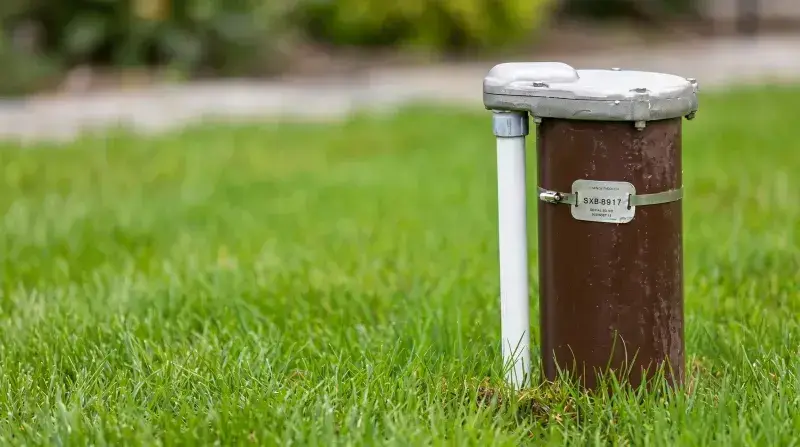
Well Installation & Completion Services
Proper well completion protects your water for decades.
Well installation and completion is the critical phase that transforms a drilled borehole into a safe, long-lasting water supply. At Mighton's Well Services, we approach well completion with the same care and precision that has earned our family-owned company the trust of Simcoe County homeowners and businesses for over 60 years. Every component we install — from the casing and screen to the annular seal and surface protection — is selected and placed to ensure your well delivers clean water reliably for decades.
Ontario Regulation 903 establishes detailed standards for well construction and completion across the province. These standards exist because a poorly completed well is not just an unreliable water source — it is a direct pathway for surface contaminants to reach the aquifer that supplies your water and potentially your neighbours' water. We take compliance seriously, and our licensed well technicians are thoroughly trained in current regulatory requirements for casing materials, minimum casing depths, annular sealing specifications, and surface completion details.
The geology of Simcoe County presents varied completion challenges. In the unconsolidated sand and gravel deposits along the Wasaga Beach corridor and the Nottawasaga River valley, proper screen selection and gravel packing are essential to prevent sand infiltration while allowing adequate water flow. In the bedrock formations of the Niagara Escarpment foothills and the limestone plains of Oro-Medonte and Ramara, open-hole completions may be appropriate, but casing must extend through all overburden and into competent rock with a proper rock seat seal. We also install pitless adapters on every well to provide a sanitary, frost-protected connection between your well and your home's water line — an essential consideration in our climate where frost penetrates four to five feet below grade.
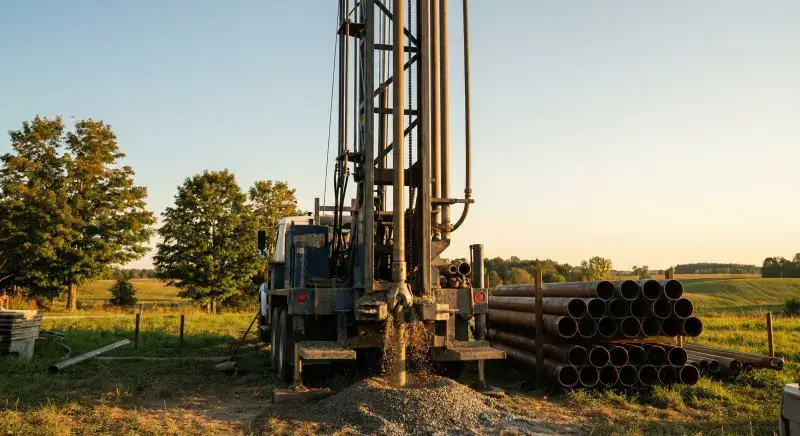
The well completion process involves a carefully sequenced series of steps, each critical to the final result. Once the borehole has been drilled and the target aquifer identified, we begin by lowering the casing — steel or PVC depending on conditions — to the required depth, ensuring it sits plumb and centred in the borehole. For wells completed in sand and gravel aquifers, we attach a stainless steel screen to the bottom of the casing string, with the slot size selected based on a grain-size analysis of the formation material. We then seal the annular space between the casing and the borehole wall using a tremie pipe to pump bentonite or cement grout from the bottom up, eliminating voids that could allow contaminant migration. The well is developed by surging and pumping to remove drilling fluid and fine particles, establishing a clean, efficient flow path from the aquifer into the well. Finally, the pitless adapter is installed, the water line is connected, and the well cap and surface grading are completed to direct water away from the casing.
Seasonal conditions in Simcoe County influence both the timing and approach to well completion work. Spring completions require particular attention to surface water management, as snowmelt and rain can saturate the ground around the well site and complicate annular sealing and surface grading. Summer is the most common season for new well completions tied to residential construction projects, and the warm temperatures are ideal for cement grout curing. Fall completions should be scheduled with enough lead time to ensure the pitless adapter, water line, and surface work are finished before the ground freezes. Winter completions are entirely feasible — our crew works through the cold months routinely — but frozen ground requires additional effort for trenching the water line from the well to the building, and we take extra precautions to protect exposed connections from freezing before the system is pressurized and running.
The specific geology beneath your property directly shapes the completion approach we use. In the sandy areas around Wasaga Beach, where glacial outwash deposits can extend 60 feet or more below surface, screen selection and gravel packing are paramount — the wrong slot size means either sand pumping that destroys your pump or restricted flow that starves your household of water. In Springwater Township, thick clay layers above the aquifer provide a natural barrier against surface contamination, but they also require careful grouting technique to ensure the annular seal bonds properly to the clay rather than leaving gaps. In the fractured bedrock zones of Clearview and the Blue Mountains, wells are often completed as open-hole below the casing seat in rock, and the quality of the rock seat seal — where the steel casing meets the bedrock — is the single most critical detail in the entire completion. Near Barrie, glacial deposits can contain multiple water-bearing layers separated by clay, and we must seal through intermediate zones to prevent cross-contamination between aquifers as required by Ontario Regulation 903.
Homeowners should understand that well completion is not simply the final step of drilling — it is the work that determines whether your well will be a dependable, low-maintenance water source or a recurring headache. A well that is drilled to the right depth but poorly completed will produce problems: sand in the water, bacterial contamination, declining yield, and expensive repairs. We encourage property owners to ask questions about the completion process and to review their well record, which documents every component installed. If you are purchasing a property with an existing well, having that well record reviewed by a licensed technician can reveal whether the completion meets current standards or whether upgrades may be needed. Mighton's Well Services is always available to inspect existing wells and provide honest, straightforward assessments of their condition and remaining service life.
What's Included
Our well installation service covers everything you need for reliable results.
Well Casing & Screening
Installation of steel or PVC well casing to the required depth, with stainless steel screens sized to match the aquifer formation. Proper casing protects the well from collapse and prevents surface water from entering the borehole. Screen slot sizes are selected based on the grain size of the aquifer material to maximize yield while preventing sand production.
Well Development
After casing and screening are installed, the well must be developed to remove drilling mud, fine sediment, and disturbed formation material from around the screen. We use surging, jetting, and controlled pumping techniques to clean the well bore and establish a natural gravel pack around the screen, maximizing long-term yield and water clarity.
Sealing & Grouting
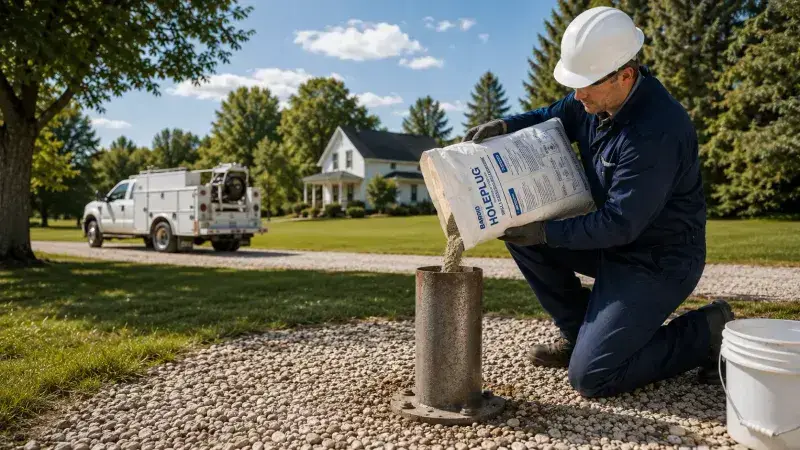
Annular sealing with bentonite or cement grout fills the space between the well casing and the borehole wall. This seal prevents surface water, shallow groundwater, and contaminants from migrating down the outside of the casing into the aquifer. Ontario Regulation 903 specifies minimum sealing depths and material requirements that we follow rigorously on every installation.
Pitless Adapter Installation
A pitless adapter provides a sanitary, below-frost-line connection between the well casing and the horizontal water line running to your building. This eliminates the need for a well pit, which is no longer permitted under Ontario regulations due to contamination risk. We install pitless adapters at a depth of at least five feet to protect against freezing in Simcoe County winters.
Well Disinfection
Every new well and any well that has been opened for service must be disinfected before being put into use. We perform chlorine shock treatment following Ontario guidelines, allowing adequate contact time to eliminate bacteria introduced during construction. Post-disinfection water testing confirms the well is safe for drinking before we hand it over to you.
How It Works
From initial assessment to project completion — here's what to expect.
Casing & Screen Installation
Based on the drilling log and geological conditions, we select the appropriate casing material and diameter, screen type, and slot size. The casing is lowered into the borehole and seated properly, with screens positioned across the target aquifer zone.
Annular Sealing
We seal the annular space between the casing and borehole wall with approved bentonite or cement grout. The seal is placed from the bottom of the casing up to surface level, with particular attention to sealing through any vulnerable formations that could allow cross-contamination between aquifers.
Well Development & Yield Testing
The well is developed through surging and pumping to remove fine material and establish clear water flow. We then conduct a pumping test to determine the sustainable yield, drawdown characteristics, and recovery rate of the well — essential data for sizing the pump system.
Surface Completion & Pitless Adapter
We install the pitless adapter below frost line, connect the horizontal water line to the house, mount a vermin-proof well cap, and ensure the casing extends the required height above finished grade. The well is disinfected and a bacteriological test is submitted before the system is put into service.
Common Problems We Solve
We've seen it all in our 60+ years. Here are the issues we resolve most often.
Sand Pumping
Wells completed in sand and gravel aquifers can pump sand if the screen slot size is too large, the screen is damaged, or the well was not properly developed. Sand causes rapid pump wear and clogs plumbing fixtures.
We select screen slot sizes matched to the aquifer grain size using sieve analysis when possible. Thorough well development establishes a natural gravel pack around the screen that filters fine particles. For existing sand-pumping wells, we can assess and replace screens or install sand separators.
Inadequate Annular Seal
If the annular space between casing and borehole is not properly sealed, surface water, road salt, septic effluent, or shallow contaminated groundwater can migrate down the outside of the casing and enter the well, causing persistent bacterial contamination or elevated nitrates.
We follow Ontario Regulation 903 requirements for annular sealing materials and methods, using tremie-pipe placement of grout to ensure complete coverage without voids. For existing wells with suspected seal failures, we can perform video inspection and remedial grouting.
Frost Damage to Well Components
In Simcoe County, the frost line extends four to five feet below grade. Well connections made above this depth, or old-style well pits, are vulnerable to freezing in winter, which can crack fittings, burst pipes, and leave you without water during the coldest months.
We install pitless adapters at a minimum depth of five feet and ensure all water lines are buried below the frost line. Heat trace cable can be added as supplemental protection for exposed runs. Well pits are no longer code-compliant and should be decommissioned.
Have a Well Installation Question?
Our experienced team is ready to help. Call for a free phone consultation or request a site visit.
Frequently Asked Questions
Common questions about well installation in Simcoe County and Grey County. Can't find your answer? Get in touch.
What type of well casing do you use?
What is a pitless adapter and why is it important?
How do you seal the space around the well casing?
Why does a new well need to be disinfected?
What is well development and how long does it take?
Can you upgrade the completion of an existing well?
What is the minimum casing height above ground for a well?
How do I know if my well was properly completed?
Well Installation Across Simcoe County & Grey County
We provide well installation services across our entire service area. Whether you're in Wasaga Beach, Barrie, or Collingwood, our team has the local knowledge and experience to deliver reliable results.
Wasaga Beach Area
Grey County
Related Services
Well Installation often goes hand-in-hand with these other services we provide:
Ready to Get Started With Well Installation?
Contact our experienced team for a free consultation and estimate. Over 60 years of trusted service.