Well Installation & Completion in Innisfil
Professional well installation services for Innisfil homes, farms, and businesses.
Well installation in Innisfil must address the diverse geological conditions found across this rapidly growing Lake Simcoe community, including the notable artesian zones that set this area apart from much of our service region. Where artesian conditions exist — confined aquifers where groundwater is under natural pressure — the well completion must safely contain this pressure while directing the water through the pump system. Standard well construction for non-artesian wells involves casing, grouting, and a pitless adapter, but artesian wells require additional sealing measures and flow-control hardware to prevent uncontrolled discharge. The Lake Simcoe shoreline communities of Alcona, Lefroy, and Belle Ewart often feature sandier glacial deposits where well screens may be needed for overburden completions. Further inland, clay becomes more prevalent and bedrock completions are common. Regardless of the aquifer type, proper grouting is essential to prevent communication between different water-bearing layers that may have different quality characteristics. Innisfil newer residential developments generate strong demand for well installation, and our crews often work alongside builders to integrate the well system into the overall construction plan. We handle everything from the submersible pump installation through the pressure system commissioning, with each component sized to match the specific yield and depth of your well. Disinfection and laboratory water testing complete every Innisfil installation.
Local to Innisfil
Based just 45 min away in Stayner. We know the geology and well conditions in your area from decades of experience.
Licensed & Insured
MECP Licensed Well Contractor #C-8303. All work to Ontario Regulation 903 standards with Jeff Mighton (Class 1 & Class 4).
60+ Years Experience
Family-owned since 1964. Trusted by thousands of homeowners, farmers, and businesses across Simcoe County and Grey County.
What to Expect for Well Installation in Innisfil
When our team arrives at your property in Innisfil, here's how the process works. Learn more about our full well installation process.
Casing & Screen Installation
Based on the drilling log and geological conditions, we select the appropriate casing material and diameter, screen type, and slot size. The casing is lowered into the borehole and seated properly, with screens positioned across the target aquifer zone.
Annular Sealing
We seal the annular space between the casing and borehole wall with approved bentonite or cement grout. The seal is placed from the bottom of the casing up to surface level, with particular attention to sealing through any vulnerable formations that could allow cross-contamination between aquifers.
Well Development & Yield Testing
The well is developed through surging and pumping to remove fine material and establish clear water flow. We then conduct a pumping test to determine the sustainable yield, drawdown characteristics, and recovery rate of the well — essential data for sizing the pump system.
Surface Completion & Pitless Adapter
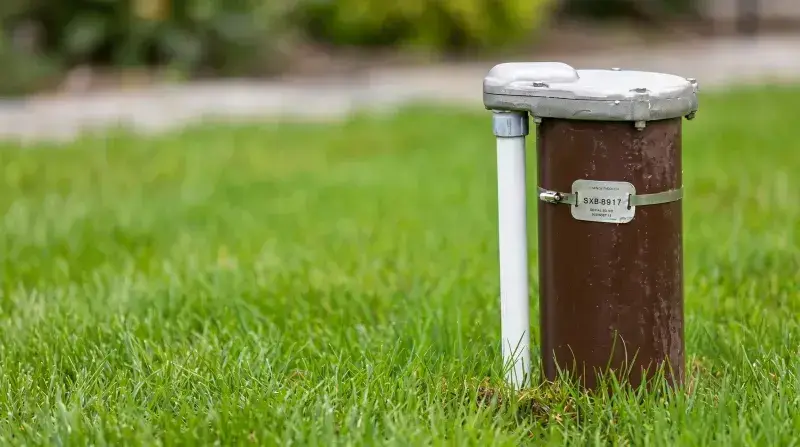
We install the pitless adapter below frost line, connect the horizontal water line to the house, mount a vermin-proof well cap, and ensure the casing extends the required height above finished grade. The well is disinfected and a bacteriological test is submitted before the system is put into service.
Common Well Installation Issues in Innisfil
Containing artesian pressure during and after well construction
Artesian wells in parts of Innisfil produce water that rises above the ground surface under natural pressure. If the casing is not properly sealed before the artesian zone is penetrated, or if the finished well is not equipped to contain the pressure, water flows uncontrolled at the surface, eroding the area around the well and wasting groundwater resources.
When artesian conditions are anticipated or encountered, we use weighted drilling fluids to control the flow during drilling and install a special wellhead assembly that contains the artesian pressure. The casing seal is designed to handle the upward pressure, and a flow-control valve allows managed discharge. The pump system operates within this contained environment, using the natural pressure advantageously while preventing uncontrolled flow.
Sand screen selection for Lake Simcoe shoreline aquifers
The sandy glacial deposits near Innisfil shoreline communities host productive but fine-grained aquifers. If the well screen slot size is even slightly too large for the local formation, fine sand will enter the well and cause pump wear, pipe clogging, and sediment in the water supply.
We perform grain-size analysis on formation samples from the specific aquifer zone at your property. The screen is selected with slot openings that retain the finest particles in the formation while maximizing water entry. A gravel pack provides supplementary filtration in very fine sands. This precise approach prevents sand problems from the day the well is placed in service.
Sealing between multiple aquifer layers in variable glacial deposits
Innisfil geology often includes multiple water-bearing zones separated by clay layers. If the well casing is not grouted through these separating clay layers, water from shallower, potentially lower-quality aquifers can migrate down the annular space and mix with the deeper production aquifer.
We grout the entire annular space from the production zone to the surface, sealing every layer along the way. This ensures that only water from the intended production aquifer enters the well. The grout is placed from bottom to top using tremie methods to guarantee continuous coverage without leaving any gaps that could allow cross-aquifer communication.
Understand Your Innisfil Water Chemistry Before Choosing Treatment
Resist the urge to install water treatment equipment before your new well is tested. The water chemistry in Innisfil varies significantly depending on whether your well draws from a shallow sand aquifer, a deeper confined aquifer, or bedrock. Each source has its own mineral profile. Wait for the laboratory results, then invest in exactly the treatment you need. You may be pleasantly surprised by the quality, or you may discover a specific parameter that needs targeted treatment. Either way, you make a smarter investment.
Need Well Installation in Innisfil?
Call us for a free phone consultation or request a site visit. We're your local experts.
Well Installation in Innisfil: Frequently Asked Questions
How is an artesian well completed differently in Innisfil?
Does artesian pressure mean I do not need a pump in my Innisfil well?
What kind of pump do Innisfil wells typically need?
How is the water line installed from the Innisfil well to my house?
Do I need treatment equipment with my new Innisfil well?
Other Services We Provide in Innisfil
Beyond well installation, we offer a full range of well and water services in Innisfil:
We Also Provide Well Installation in Nearby Areas
Serving communities across Simcoe County and Grey County from our home base in Stayner.
Serving Innisfil and Surrounding Areas
Ready to Get Started in Innisfil?
Contact our experienced team for a free consultation and estimate. Over 60 years of trusted service.