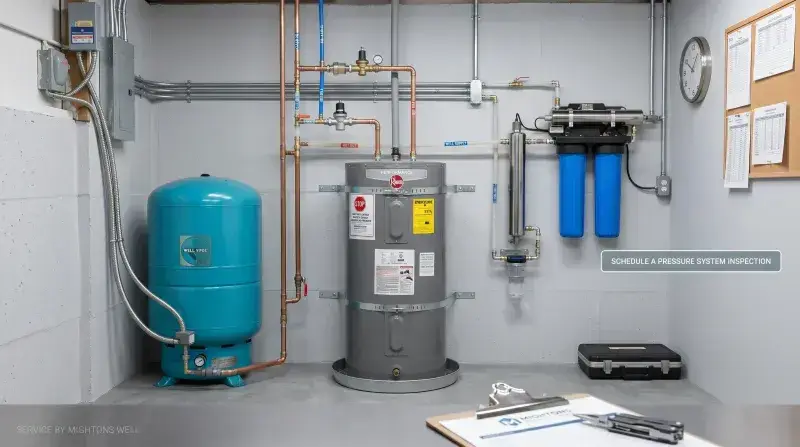
Pump & Pressure System Services
Consistent water pressure from the right pump for your well.
Your well pump and pressure system are the heart of your water supply — they determine the flow rate, pressure consistency, and reliability of water delivery to every fixture in your home or business. Mighton's Well Services provides complete pump and pressure system services across Simcoe County, from new installations matched precisely to your well's capacity to repairs and upgrades that restore or improve performance. With over 60 years of experience, we have installed and serviced thousands of pump systems in every type of well and application found in our region.
Choosing the right pump for your well is not a one-size-fits-all decision. The pump must be sized to match the well's tested yield, the depth to water, the total dynamic head (the vertical and frictional resistance the pump must overcome), and the peak water demand of your household or operation. An undersized pump delivers frustrating low pressure during periods of high demand. An oversized pump can damage the well by drawing the water level below the screen, pumping sand, and burning out prematurely. We take the time to calculate these factors properly and recommend equipment that will deliver reliable service for years.
Simcoe County's varied well depths and geological conditions mean we work with a full range of pump types. Submersible pumps are the standard for drilled wells deeper than 25 feet and are what most homeowners in our area require. Jet pumps serve shallower wells and certain specialized applications. For operations that need consistent pressure regardless of demand — such as homes with multiple bathrooms, irrigation systems, or livestock operations — we install constant pressure variable frequency drive systems that automatically adjust pump speed to maintain steady pressure. We carry major pump brands including Goulds, Grundfos, and Franklin Electric, and stock common replacement parts to minimize your downtime.
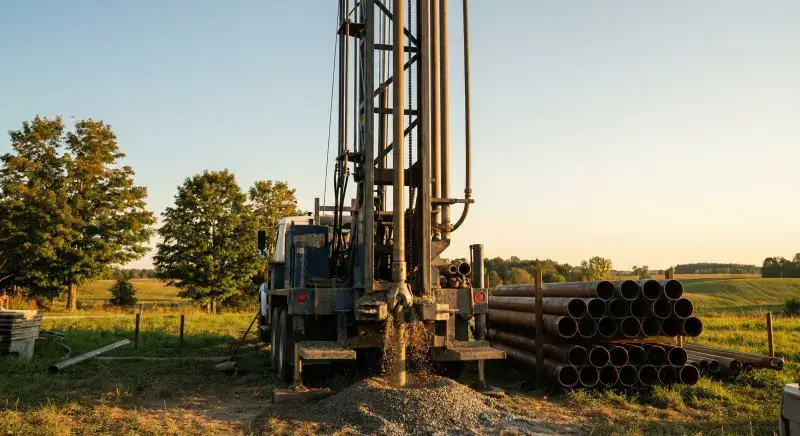
Our pump installation methodology begins with a detailed assessment of your well and water needs. We review the well record to confirm the depth, diameter, static water level, and tested yield. We measure the current water level to check for any changes since the well was drilled. We then calculate the total dynamic head — accounting for the vertical lift from water level to pressure tank, friction losses in the drop pipe and plumbing, and the target delivery pressure — to select a pump that operates at peak efficiency for your specific conditions. For submersible pump installations, our service rig lowers the pump, stainless steel drop pipe, safety rope, and submersible electrical cable to the calculated setting depth inside the well. All connections are secured with stainless steel clamps rated for continuous submersion. At the surface, we install the pitless adapter connection, pressure tank, pressure switch, and electrical controls, then run the system through a complete startup and calibration sequence to verify flow rate, pressure, amperage draw, and cycle timing before handing it over.
Seasonal factors affect both pump performance and the timing of service work. Summer is the peak demand season when pumps work hardest, and it is also when thunderstorms pose the greatest risk of lightning damage to pump motors and controls — a leading cause of emergency pump failure calls in rural Simcoe County. If you notice your pump cycling more frequently during summer months, it may indicate that your household demand is approaching the well yield limit or that the pressure tank has lost its air charge. Fall is an excellent time for a preventive pump system checkup before winter sets in. Winter places unique stress on pump systems: extreme cold can affect pressure switch operation, frozen water lines strain the system, and any failure during a cold snap becomes a more urgent emergency since pipes can freeze and burst without water flow. Spring brings rising water tables that, in some areas, can submerge pump controls or flood well pits on older installations, causing electrical faults.
The geological characteristics of your area within Simcoe County directly influence your pump system requirements. Shallow sand and gravel wells near Wasaga Beach often have high yields but can produce fine sand that is abrasive to pump impellers — we select pumps with sand-resistant construction and may recommend a sand separator for wells with persistent fine sediment. Deep bedrock wells in the Clearview and Blue Mountains area may have lower yields but require pumps capable of significant lift, and the naturally occurring minerals in the fractured rock groundwater can accelerate wear on standard pump components. In the clay-dominated areas of Springwater Township, wells often tap confined aquifers with artesian or near-artesian pressure, which changes the pump sizing calculations and may allow for a smaller pump than depth alone would suggest. Around Barrie, where glacial deposits create variable aquifer conditions, pump sizing must account for the possibility of seasonal water level fluctuations that can be more pronounced than in bedrock wells.
Homeowners should be aware of several important points about pump and pressure systems. First, a pump is a mechanical device with a finite lifespan — typically 10 to 15 years for a quality submersible pump in good water conditions. Planning for eventual replacement rather than waiting for a catastrophic failure in the middle of winter is both less stressful and often less expensive. Second, the pressure tank is just as important as the pump itself. A waterlogged tank — one whose internal bladder has failed — forces the pump to cycle on and off rapidly, which dramatically shortens motor life. Checking your tank's air pressure annually with a tire gauge is a simple step that can prevent premature pump failure. Third, if you experience a lightning strike near your property, have your pump system inspected even if it appears to be working — partial damage can cause intermittent problems that worsen over time. Mighton's Well Services recommends surge protectors on all pump circuits and installs them as standard practice on new installations.
What's Included
Our pump systems service covers everything you need for reliable results.
Submersible Pump Installation
Installation of submersible well pumps sized to match your well yield, depth, and household demand. Submersible pumps sit inside the well casing, submerged below the water level, and push water to the surface. We install pumps from leading manufacturers with stainless steel construction for long life in the mineral-rich groundwater common throughout Simcoe County.
Jet Pump Installation
Jet pumps are surface-mounted units suitable for shallow wells up to 25 feet deep (single-line) or up to 90 feet (dual-line). They are common in older installations and certain applications where surface access to the pump is preferred. We install, repair, and convert jet pump systems, and can advise when upgrading to a submersible pump would improve performance and reliability.
Pump Repair & Replacement
Diagnosis and repair of pump failures including motor burnout, impeller wear, check valve failure, electrical faults, and control system malfunctions. When repair is not cost-effective, we provide complete pump replacement using properly sized equipment. We pull and reinstall submersible pumps with our service rig and can typically restore your water supply the same day.
Pressure Tank Installation
Pressure tanks store pressurized water and reduce the number of pump start cycles, extending pump motor life. We install and replace bladder-style pressure tanks in sizes matched to your pump capacity and household demand. Waterlogged or failed tanks cause rapid pump cycling — a common service call that we can resolve quickly with a properly sized replacement.
Constant Pressure Systems
Variable frequency drive (VFD) constant pressure systems automatically adjust pump motor speed to maintain steady water pressure regardless of how many fixtures are in use. These systems eliminate the pressure fluctuations common with conventional pump setups and are ideal for homes with multiple bathrooms, irrigation, or varying demand. We install and program these systems for optimal performance.
Pump Testing & Optimization
We test existing pump installations to verify they are operating efficiently and matched to the well capacity. This includes measuring flow rate, amperage draw, pressure output, and cycle frequency. Poorly performing systems waste electricity, wear out prematurely, and deliver inconsistent water. Our testing identifies opportunities to improve performance through adjustment, repair, or right-sizing.
How It Works
From initial assessment to project completion — here's what to expect.
Assessment & Sizing
We review your well record, measure depth to water, test the current system performance, and assess your household demand. For new installations, we calculate the total dynamic head and select a pump that matches the well yield without exceeding its safe capacity.
Equipment Selection
We recommend specific pump and pressure system equipment based on the assessment, explaining the options and their trade-offs in terms of performance, longevity, and cost. We use proven brands and carry stock of common models to minimize lead times.
Installation
For submersible pumps, we use our service rig to lower the pump, drop pipe, safety rope, and wiring to the correct depth inside the well. All connections are made with stainless steel hardware. The pitless adapter, pressure tank, pressure switch, and electrical connections are installed and tested.
Startup & Calibration
We start the system, adjust pressure switch settings, verify flow rate and pressure, check amperage draw against motor specifications, and confirm proper cycling. For constant pressure systems, we program the VFD controller to your preferred pressure setting and verify smooth operation across the full range of demand.
Walkthrough & Documentation
We show you the installed equipment, explain how it operates, identify the pressure switch and tank, and provide guidance on what to watch for that would indicate a future service need. All installation details are documented for your records.
Common Problems We Solve
We've seen it all in our 60+ years. Here are the issues we resolve most often.
Pump Short Cycling
The pump turns on and off every few seconds or minutes instead of running for sustained periods. This dramatically shortens motor life. The most common cause is a waterlogged pressure tank where the internal bladder has failed and the tank can no longer hold an air charge.
We test the tank air pressure and check for a failed bladder. In most cases, replacing the pressure tank solves the problem immediately. We also check the pressure switch and verify there are no leaks in the plumbing system that could contribute to rapid cycling.
Low Water Pressure
Water pressure drops when multiple fixtures are used simultaneously, during showers, or when the irrigation system runs. This may indicate an undersized pump, a failing pump motor losing capacity, a partially closed valve, clogged filters, or a well that cannot keep up with demand.
We systematically test pressure at the tank, measure flow rate, and check the well yield against current demand. Solutions range from adjusting the pressure switch, cleaning or replacing filters, to upgrading to a larger pump or installing a constant pressure system for demand-variable applications.
No Water from Pump
A complete loss of water is often caused by a tripped breaker, failed pressure switch, burned out pump motor, broken drop pipe, or the water level dropping below the pump intake. Lightning strikes are a common cause of sudden pump failure in rural Simcoe County.
We check electrical supply first, then test the pump control system. If the pump motor has failed, we pull the submersible pump using our service rig and install a replacement. We carry common pump sizes in stock and can typically restore water service within the same day for most residential systems.
Pump Running Continuously
A pump that never shuts off is running against a problem — either a plumbing leak, a stuck pressure switch, a well that has been pumped down below the pump intake, or a pump that can no longer generate enough pressure to reach the cut-off setting.
We test the system pressure while the pump runs to determine if it is building pressure slowly or not at all. A pump that cannot reach cut-off pressure likely has worn impellers or a leak in the drop pipe. We diagnose the specific cause and repair or replace the affected component.
Have a Pump Systems Question?
Our experienced team is ready to help. Call for a free phone consultation or request a site visit.
Frequently Asked Questions
Common questions about pump systems in Simcoe County and Grey County. Can't find your answer? Get in touch.
How long does a submersible well pump last?
What size pressure tank do I need?
What is a constant pressure system and do I need one?
Why does my water pressure fluctuate?
Can you upgrade my jet pump to a submersible pump?
My pump was struck by lightning — is it covered by insurance?
How do I know if my pump is the right size for my well?
What maintenance does a pump system need?
How quickly can you replace a failed pump?
What does it cost to replace a well pump in Simcoe County?
Pump Systems Across Simcoe County & Grey County
We provide pump systems services across our entire service area. Whether you're in Wasaga Beach, Barrie, or Collingwood, our team has the local knowledge and experience to deliver reliable results.
Wasaga Beach Area
Grey County
Related Services
Pump Systems often goes hand-in-hand with these other services we provide:
Ready to Get Started With Pump Systems?
Contact our experienced team for a free consultation and estimate. Over 60 years of trusted service.