How Much Does It Cost to Drill a Well in Simcoe County? (2026 Price Guide)
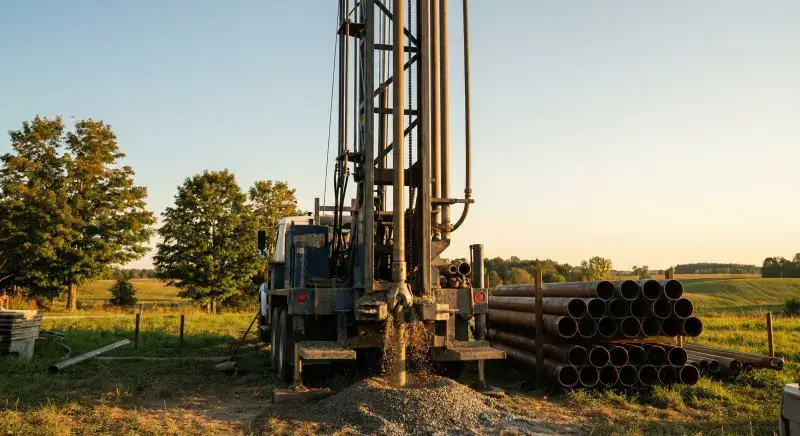
How much does it cost to drill a well? In Simcoe County, a complete new drilled well with pump installation generally runs $18,000 to $30,000 or more in 2026. Within that figure, drilling and completion typically account for $12,000 to $24,000, with the pump system, pressure tank, and hookup to the house making up most of the rest. The single biggest variable is depth — and depth is set by the geology under your specific property, not by the contractor. This guide breaks down where every dollar goes so you can read a quote with confidence.
After more than six decades of well drilling across Simcoe County and Grey County, we have drilled wells at nearly every depth and in every formation the region produces. Here is what actually drives the price.
Where the money goes: a line-by-line breakdown
A well quote is really several projects bundled together. Here is how a typical residential project in our service area splits out:
- Drilling and casing: roughly $90 per foot. This covers mobilizing the drill rig, drilling through overburden and into the aquifer, installing casing, and logging the formations encountered. At 2026 rates, a 100-foot well runs about $9,000 for the drilling itself and a 200-foot well about $18,000 — before the completion items below.
- Well screen and liner: roughly $3,400 where required. Wells finished in sand and gravel aquifers need a screen sized to the formation. It costs real money upfront but resists the iron- and mineral-rich groundwater common across the county for decades.
- Regulation 903 flow test: roughly $2,300. Ontario requires a controlled yield test on every new well, and it is what lets the pump be sized correctly instead of guessed.
- Well cap and drive shoe: roughly $300. The drive shoe is welded to the leading edge of the casing to keep it from buckling in rough ground; the vermin-proof cap seals the top.
- Pump and pressure system: $4,000 to $8,000. A submersible pump sized to the tested yield, a bladder-style pressure tank, the pitless adapter connection, and electrical controls. More on this below.
- Hookup to the house: often included in the pump quote. Trenching the water line from the well to the building, below the four-to-five-foot frost line, plus the connection inside.
- Water treatment: $1,500 to $5,000 if needed. Much of Simcoe County’s groundwater passes through limestone and dolomite, picking up calcium, iron, and manganese. Softeners and iron filters are a common add-on, not a given.
- Decommissioning the old well: roughly $1,000 to $3,000. If the new well replaces an old one, Ontario regulation requires the old well to be properly plugged and sealed by a licensed contractor.
Depth is the price: what determines how deep you drill
Well drilling is not a guaranteed-depth process. The drill stops when it reaches a productive aquifer, and where that aquifer sits varies enormously across the county — sometimes even within a single neighbourhood. Simcoe County’s subsurface was shaped by glacial activity, which left behind a patchwork of sand, gravel, clay, and till sitting on top of bedrock at wildly different thicknesses.
In broad strokes:
- Sandy glacial deposits — Wasaga Beach, the Nottawasaga River valley, and south toward Barrie. Thick sand and gravel overlying the bedrock often contains productive shallow aquifers. Wells here can sometimes be completed at 40 to 80 feet, which puts them at the low end of the cost range.
- Bedrock areas — Clearview, Essa, and Oro-Medonte Townships. Fractured dolostone and limestone close to surface means wells commonly run 80 to 200 feet or more. Rotary drilling handles the hard rock efficiently, but every extra foot is on the invoice.
- Heavy clay overburden — Springwater Township. Dozens of feet of tight, low-permeability clay must be drilled through before reaching water-bearing zones beneath, and the casing has to run the full distance.
- The Escarpment corridor — Collingwood and The Blue Mountains. Fractured bedrock aquifers here are productive but hard, favouring rotary methods and moderate-to-deep completions.
Before quoting, we review existing well records for properties near your site, which tells us what formations to expect and roughly how deep the water sits. Our Simcoe County well depth and aquifer map shows typical drilling depths by township, and the province’s well records map lets you look up the original construction record for most wells drilled after 1946 — including your neighbours’. Ten minutes on that map is the cheapest cost research you will ever do.
Rotary versus cable tool: does the method change the price?
We drill with both rotary and cable tool methods, choosing based on subsurface conditions rather than price. Rotary drilling cuts through consolidated bedrock quickly, making it the efficient choice across the hard-rock areas of the county. Cable tool drilling is slower but preserves the natural structure of unconsolidated sand and gravel formations, which matters for long-term well performance in shallow aquifers.
The honest answer on cost: the method matched to your geology is the cheapest method, because the wrong one costs you in drilling time, completion problems, or a well that underperforms for decades. The same is true of construction quality generally. Proper casing, a quality stainless steel screen, thorough annular sealing, and complete well development all add cost — and all of them dramatically extend the life of the well. The cheapest well is rarely the best-value well.
The pump system: the other half of the invoice
Once the well is drilled and yield-tested, it needs a pump and pressure system to actually deliver water to your taps. For drilled wells deeper than 25 feet — which is most of them — that means a submersible pump sized to the well’s tested yield, the depth to water, and your household’s peak demand. Budget $4,000 to $8,000 for the pump, pressure tank, pitless adapter, wiring, and hookup.
Sizing matters more than brand. An undersized pump means weak pressure whenever two fixtures run at once. An oversized pump can draw the water level below the screen, pull sand, and burn itself out early. A properly sized system, by contrast, typically delivers 10 to 15 years of service before replacement. Homes with multiple bathrooms or irrigation demand sometimes step up to a constant pressure system, which adjusts pump speed automatically to hold steady pressure — a worthwhile upgrade cost for the right household.
Decommissioning the old well
If your new well replaces a failed one, the old well cannot simply be abandoned. Ontario Regulation 903 requires wells taken out of service to be properly decommissioned — plugged and sealed by a licensed contractor so they cannot act as a direct pathway for surface contamination into the aquifer. Professional well decommissioning typically adds $1,000 to $3,000 for a standard drilled well, with large-diameter dug wells costing more. It is a real line item, but skipping it is not an option, and an unsealed old well is a liability for your property and every well around it.
One planning note: no permit is needed to drill a domestic well in Ontario, but the well must be constructed by a licensed well technician to Regulation 903 standards, and a well record is filed with the Ministry of the Environment after completion. That compliance work is built into a legitimate contractor’s price.
Seasonal timing and your budget
We drill year-round, and each season has trade-offs. Spring and fall are popular for new construction, since builders want water established before other trades arrive. Summer offers long days and predictable weather but is also peak season, so lead times stretch. Winter drilling is entirely feasible and quietly underrated: frozen ground supports the rig well, surface disruption to lawns and driveways drops, and our schedule is more flexible, which usually means faster booking. Per-foot pricing does not swing with the calendar, but flexibility on timing can get your well in the ground weeks sooner.
Before you spend $20,000: is a new well actually the answer?
If you are pricing a new well because your existing well is underperforming, pause before committing. Most yield decline in Simcoe County wells comes from mineral scaling and iron fouling, and acid rehabilitation — typically $2,500 to $6,000 — restores most of these wells at a fraction of the cost of replacement. We cover how to tell the difference in our guide to the warning signs you need a new well. A proper diagnostic costs little and can save you the entire price of this article’s subject.
Getting a real number for your property
Everything above is a range because every property is different. A real estimate starts with a review of nearby well records, a site visit to confirm rig access and regulatory setbacks, and a written quote that spells out per-foot rates, casing, completion, and what happens if conditions differ from expectations. We provide detailed written estimates with no hidden fees — we bill transparently for actual work performed.
Frequently Asked Questions
How much does it cost to drill a well in Simcoe County?
A complete new drilled well with pump installation in Simcoe County generally runs $18,000 to $30,000 or more in 2026. The drilling and completion portion typically falls between $12,000 and $24,000 depending on depth and geology — as a real example, a 138-foot well came to $18,420 plus HST for drilling, screen, flow test, and cap — with the pump, pressure tank, and hookup to the house making up most of the balance. Properties that need water treatment equipment or decommissioning of an old well should budget above the base range.
How much does well drilling cost per foot in Ontario?
Most Ontario drilling contractors price drilling and casing together on a per-foot basis, and in Simcoe County that rate is roughly $90 per foot at 2026 prices. On top of the per-foot drilling, a typical quote adds fixed completion items: a well screen or liner (roughly $3,400) where the formation requires one, the Regulation 903 flow test (roughly $2,300), and the well cap and drive shoe (roughly $300). The per-foot rate matters less than the depth itself, which is why reviewing nearby well records before drilling is the single best way to firm up an estimate.
Does the price of a new well include the pump?
Usually not. Drilling quotes typically cover the borehole, casing, screen where required, annular sealing, well development, and filing the well record — the pump system is priced separately because it is sized after the well is drilled and yield-tested. A submersible pump, pressure tank, pitless adapter connection, and trenched water line to the house generally add $4,000 to $8,000. Sizing the pump to the tested yield rather than guessing beforehand protects both the pump and the well.
What makes a well cost more than expected?
Depth is the biggest variable — a well that needs 200 feet to reach a productive aquifer costs substantially more than one completed at 60 feet, and final depth is determined by what the drill encounters, not by the estimate. Other common additions are extended steel casing through deep or unstable overburden, water treatment equipment for hard or iron-rich water, difficult site access for the drill rig, and the required decommissioning of an old well being taken out of service. A contractor who reviews area well records upfront can flag most of these before the rig arrives.
Is it cheaper to drill a well in winter in Ontario?
Winter drilling in Simcoe County is entirely feasible and sometimes works in the homeowner’s favour. Frozen ground supports heavy equipment well and reduces damage to lawns and driveways, and because winter is a quieter season for new construction wells, scheduling is often more flexible and booking times faster. Per-foot rates do not usually change with the season, but avoiding the spring and summer rush can shorten your wait considerably. The key technical requirement is completing the pitless adapter and water line below the frost line, which reaches four to five feet in our area.
If you are planning a new well and want an honest, written estimate based on the actual well records around your property, our team is available to help.