How Long Does a Well Pump Last? Lifespan, Failure Signs, and Replacement Costs
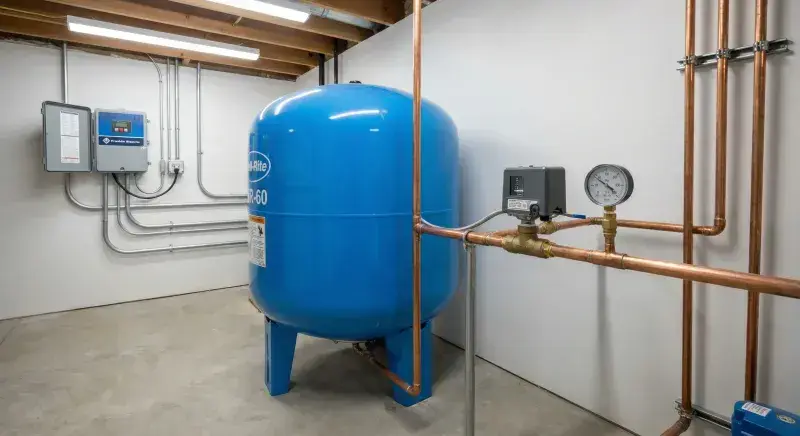
How long does a well pump last? A quality submersible pump typically delivers 10 to 15 years of service in good water conditions, while surface-mounted jet pumps generally last 8 to 12 years. Those ranges are averages, not guarantees — we have pulled submersibles still running strong after 20 years, and we have replaced pumps destroyed in under five by sand, iron fouling, or a waterlogged pressure tank nobody checked. Knowing what shortens a pump’s life, and recognizing the early failure signs, is the difference between a planned replacement on a sunny Tuesday and an emergency no-water call at 11 p.m. in February.
Our crews have installed and serviced thousands of pump and pressure systems across Simcoe County and Grey County since 1964, in every type of well the region produces. Here is what six decades of pump work tells us about lifespan, failure, and cost.
Submersible vs jet pump: what lifespan to expect
Submersible pumps are the standard for drilled wells deeper than 25 feet, which covers the large majority of wells in our service area. The pump sits inside the casing, submerged below the water level, and pushes water to the surface. Because the motor is water-cooled and protected from the elements, a properly sized submersible from a proven manufacturer — we install Goulds, Grundfos, and Franklin Electric — typically runs 10 to 15 years before replacement.
Jet pumps are surface-mounted units that pull water up rather than pushing it. Single-line jets serve wells up to about 25 feet deep; dual-line configurations reach roughly 90 feet. Because the motor works harder per litre delivered and lives above ground through freeze-thaw cycles, jet pumps generally last 8 to 12 years. Many older cottages and shallow-well properties around Midland and the Georgian Bay shoreline still run jet systems, and converting to a submersible at replacement time is often the better long-term investment.
What shortens a pump’s life
The gap between a pump that dies at year six and one that runs past year fifteen almost always comes down to a handful of factors:
- Short-cycling from a waterlogged pressure tank. When the tank’s internal bladder fails, the pump kicks on and off every few seconds instead of running in long, efficient cycles. Every start is a surge of heat and mechanical stress on the motor. This is the single most preventable cause of premature pump failure we see.
- Sand and sediment. Fine sand is abrasive to impellers. Shallow sand-and-gravel wells along the Wasaga Beach corridor and around Innisfil are the classic culprits — a well producing sand will grind through pumps until the screen problem is fixed.
- Iron fouling and mineral scale. The dissolved iron and hardness common in Simcoe County groundwater build deposits on impellers and inside the pump, forcing the motor to work harder for less water.
- Running dry. A pump that draws the water level below its intake — because the well yield declined or the pump was oversized for the well — loses its cooling and can burn out in minutes.
- Undersizing and oversizing. An undersized pump runs constantly trying to meet demand; an oversized pump overdraws the well, pulls sand, and cycles hard. Correct sizing against the well’s tested yield and total dynamic head is the foundation of pump longevity.
- Lightning. Summer thunderstorms are a leading cause of emergency pump calls in rural Simcoe County. A nearby strike can take out the motor, control box, and wiring at once, which is why we install surge protection as standard practice on new systems.
Six signs your well pump is failing
1. No water at all
The bluntest symptom. If taps go dry suddenly, the likely suspects are the pump motor, the pressure switch, the control box, wiring, or a tripped breaker — all pump-system components, not the well itself.
2. Sputtering taps and air in the lines
Air spitting from fixtures means the pump is drawing air — either the water level is dropping to the pump intake, the drop pipe has a leak, or a check valve has failed. Intermittent sputtering after heavy use is an early warning worth acting on.
3. Pressure that swings or fades
Strong pressure that fades mid-shower, or noticeable swings between fixtures, points to a pump losing capacity, a fouled impeller, or pressure tank trouble.
4. Constant or rapid cycling
A healthy system cycles the pump a few times an hour under normal use. A pump clicking on and off every few seconds while water runs is short-cycling — usually a waterlogged tank, and a pump-killer if ignored.
5. Rising hydro bills
A worn or fouled pump runs longer to move the same water. If your electricity use has crept up with no change in household habits, the pump may be labouring toward failure.
6. Breaker trips
A pump motor that trips its breaker is drawing excess current — a sign of a failing motor, a seized impeller, or an electrical fault. Reset it once. If it trips again, stop: repeatedly resetting a tripping pump breaker can turn a repairable problem into a destroyed motor.
Is it the pump or the well?
This is the most important diagnostic question, because the fixes are completely different. The general rule: sudden problems are usually pump problems; gradual problems are usually well problems.
A pump, switch, or tank failure tends to announce itself abruptly — water stops, pressure crashes, the breaker trips. The well behind the equipment still has normal yield, and service or replacement restores full water. Well problems build over months or years: yield that slowly declines, sediment appearing in the water, recovery times stretching out between draws. If your symptoms fit the gradual pattern, the issue may be fouling or structural decline in the well itself — our guide to the signs you need a new well in Simcoe County walks through that side of the diagnosis, including when rehabilitation beats replacement.
A licensed contractor separates the two with a controlled yield test before replacing anything. Swapping a pump into a well that cannot produce enough water solves nothing, and every well opened for service in Ontario must be handled by a licensed technician under Ontario Regulation 903, so proper diagnosis and proper compliance go hand in hand.
The two-minute pressure tank health check
Because a failed tank is the most common pump-killer, it earns its own checkup — one you can do annually with a tire gauge:
- Switch off power to the pump and open a tap until the system fully drains.
- Find the air valve (it looks like a tire valve) on top of the tank and check the pressure with a tire gauge.
- The reading should be about 2 psi below your pump’s cut-in pressure — typically 28 psi on a 30/50 switch.
Little or no air charge, water spitting from the air valve, or a tank that feels heavy and sloshes at the top all indicate a failed bladder. Replacing a tank costs a fraction of replacing the pump it would otherwise destroy.
Constant-pressure systems: the upgrade worth considering
If you are replacing a pump anyway, it is the right moment to consider a constant-pressure system. A variable frequency drive (VFD) adjusts the pump motor’s speed continuously to hold pressure steady regardless of how many fixtures are running — no more pressure sag when the washing machine fills mid-shower. Beyond comfort, VFD systems soft-start the motor instead of slamming it to full speed on every cycle, which reduces wear and extends pump life. They shine in homes with multiple bathrooms, irrigation systems, and livestock operations — common scenarios in the growing rural-residential areas around Barrie. We install and program these systems as part of our pump and pressure system services.
What replacement costs in Ontario
Every property is different, but typical installed ranges in our service area look like this:
- Submersible pump replacement: $2,500 to $5,500 depending on well depth, pump specification, and drop pipe condition.
- Jet pump replacement: $1,200 to $2,500.
- Pressure tank replacement: $800 to $1,800 depending on tank size.
- Constant-pressure (VFD) system upgrade: typically $2,500 to $6,000 depending on pump and controller.
Deep bedrock wells, damaged drop pipe, or wiring replacement push costs toward the top of the range. We provide a written quote after assessing the well record, water level, and your household demand — and because our service vehicles stock common pump sizes, tanks, switches, and controls, most replacements are completed in a single visit.
What an emergency no-water call looks like
When you call our 24/7 emergency line with no water, the diagnosis starts on the phone. We walk you through the basic checks — is the breaker tripped, what is the pressure gauge reading, is the pressure switch clicking — so the technician arrives with the right parts for the most likely failure. On site, we test the electrical supply, controls, and tank, and if the pump itself has failed, our service rig pulls it, and a properly sized replacement goes down the same day in most cases. Two cautions while you wait: do not repeatedly reset a tripping breaker, and never attempt to pull a submersible pump yourself — it requires specialized equipment and can be dangerous.
If your pump is past the ten-year mark, cycling oddly, or showing any of the signs above, a proactive assessment beats a midnight emergency every time. Get in touch with our team and we will give you an honest read on how much life your pump system has left.
Frequently Asked Questions
How long does a well pump last?
A quality submersible well pump typically lasts 10 to 15 years in good water conditions, while surface-mounted jet pumps generally last 8 to 12 years. Actual lifespan depends heavily on water chemistry, sediment levels, how well the pump was sized to the well, and the health of the pressure tank. Pumps in iron-rich or sandy Simcoe County aquifers, or pumps forced to short-cycle by a waterlogged tank, can fail years earlier than these ranges suggest.
What should I check first if I have no water from my well?
Start at the electrical panel and check whether the pump breaker has tripped — reset it once, but never repeatedly, as repeated resets can destroy a pump motor that is failing. Next, look at the pressure gauge on the tank: a reading of zero with the pump running points to a pump, wiring, or drop-pipe problem, while a stuck gauge or a pressure switch that clicks without the pump starting points to controls. If those checks do not restore water, call a licensed well contractor rather than attempting to pull the pump yourself.
How much does it cost to replace a well pump in Ontario?
A submersible pump replacement in Ontario — pump, drop pipe hardware, wiring, and installation with a service rig — typically runs $2,500 to $5,500 depending on well depth and pump specification. Jet pump replacements are generally less, in the $1,200 to $2,500 range, and a new pressure tank adds roughly $800 to $1,800 installed. A firm quote requires knowing your well depth, static water level, and household demand, which is why a proper assessment comes before any pricing.
How do I know if my pressure tank is waterlogged?
The classic sign is rapid pump cycling — the pump kicking on and off every few seconds while a tap runs, often with pressure pulsing at the fixtures. You can confirm it yourself: with the pump off and the system drained, check the air valve on top of the tank with a tire gauge. The reading should be about 2 psi below the pump cut-in pressure; a tank showing little or no air charge, or spitting water from the air valve, has a failed bladder and should be replaced before it destroys the pump motor.
What is a constant pressure system and is it worth the upgrade?
A constant pressure system uses a variable frequency drive (VFD) to adjust pump motor speed continuously, holding water pressure steady no matter how many fixtures are running. It eliminates the pressure swings of a conventional pressure-switch setup and reduces the hard starts that wear out pump motors. The upgrade makes the most sense for homes with multiple bathrooms, irrigation, in-law suites, or livestock watering — anywhere demand varies widely — and is often best timed to coincide with a scheduled pump replacement.